I built a studio out of agents. Here’s the org design.
Ellev8 is my design and build studio. It runs on a system of agents I designed: they research, plan, write, build and review the work, then check client sites after launch. I sit at the two points where a wrong call can’t be undone: choosing the direction and approving what ships. This is the org design behind a one-person studio with real clients, and the decisions about what stays human.
A one-person studio still has an agency’s job list: research, strategy, writing, design, build, accessibility and quality review, and looking after the site once it’s live. The clients are busy business owners. They don’t buy a process. They buy trust that the work gets done and stays done, which means quality can’t depend on how rested I am that day.
The reframe: this is org design, not tooling. Which agent owns which job? What does it have to show me before I approve? Where is a decision mine alone? And how does the system catch its own mistakes before a client does? I built the answers on the first client job, then ran every engagement since through them.
02The architecture
Each agent is a versioned skill with one job, written instructions, and a quality bar it has to clear before handing off. Every stage writes a file. The engagement state and the run log are the memory, so any agent, or I, can pick up exactly where the last one stopped. Every gate is a placed decision.
FIG. 01 · SYSTEM MAPSIX LANES · ELEVEN AGENTS · ONE IN BUILD
Editor · words first /Builder · tokens, then pagesSUPERVISED
VERIFY
Critic · scores as the audience /Auditor · access, code, truthGATE 2 · I SHIP
AFTER
Care · monthly check /Auditor monitor /Found · search and AI answers · in buildEACH FIX · I APPROVE
OVERSIGHT
Conductor · routes and logs /Steward · weekly digest, first run Oct 13READ-ONLY
Autonomy maps to what a mistake would cost. Research runs on its own; anything a client or a live site would feel waits for me. Found is designed and in build.
03Design decisions
Two gates, placed where mistakes can’t be undone
Shipped
Approve everything vs. approve the irreversible
Choosing a direction and putting work in front of a client are the two moves that are expensive to take back. Those are mine. Everything between them runs, gets reviewed by agents, and comes to me with the reviewers’ scores attached.
Impact: nothing has reached a client or a live site without my sign-off
The gatherer never concludes
Shipped
One research agent vs. Scout plus Analyst
Scout collects, with a link and a date on every item, and labels gaps as gaps. Analyst draws the conclusions from what Scout found. Keeping the jobs apart means every claim traces back to something real. On the studio’s own site, Scout found the brand thesis was already used by four other firms and the visual reference was a purchasable template. The Analyst moved the headline off both.
Impact: every client-facing claim is traceable to a source
Reviewers that didn’t build the work
Shipped
Self-critique vs. independent review
The Critic scores the page as the audience would read it. The Auditor checks accessibility, code and truth. The work loops until both pass, and the final round is run by fresh agents with no memory of the build, so nothing grades its own homework.
Impact: 11 blocking issues to 0 in three rounds on the studio’s own site; zero axe violations
Hold the fact, don’t invent it
Shipped
Fill the gap vs. stop and ask
Any fix that needs a fact only I know is held for my gate instead of guessed. Agents only describe stages that have actually run. The rule came from the first full run, where the Editor wrote copy about review stages before they had happened. The Critic caught it, and the rule went into every agent.
Impact: no invented claims shipped; open facts arrive at the gate as questions
“Coming soon” proof
Killed
Placeholder proof vs. no proof yet
Early pages held empty proof slots with placeholder text. The Critic, reading as a buyer, scored them as “coming soon,” and that undercut the real proof beside them. Proof slots now render nothing until there’s real proof to put in them.
Impact: every proof on the page is real or absent
Read-only after launch
Shipped
Agent fixes the site vs. agent proposes, I approve
Care can look at everything and change nothing. Each fix it proposes is built separately, previewed, and approved by me before it goes live. On the first pass I kept one finding, a color contrast choice, as a branding exception rather than fix it. That’s a judgment about the client’s brand that an agent shouldn’t make.
Impact: five fixes live in about a day, one deliberate exception on record
Measure before claiming
In build
Sell it now vs. prove it on my own site first
Found is the next agent: every month it measures how a client shows up in search and asks ChatGPT, Claude, Gemini and Perplexity a fixed set of questions about them, three times each, saving every answer word for word. It will run on the studio’s own site first. If it can’t show movement there over three months, the studio doesn’t sell it.
Impact: no service offered before it has its own receipts
04Four runs, one system
The system was built on a real client job, then run on the studio’s own site, a sales review and a live site’s first monthly check. Different work, same lanes, same gates.
FIG. 02 · THE RUNSSEPT TO OCT 2026
01
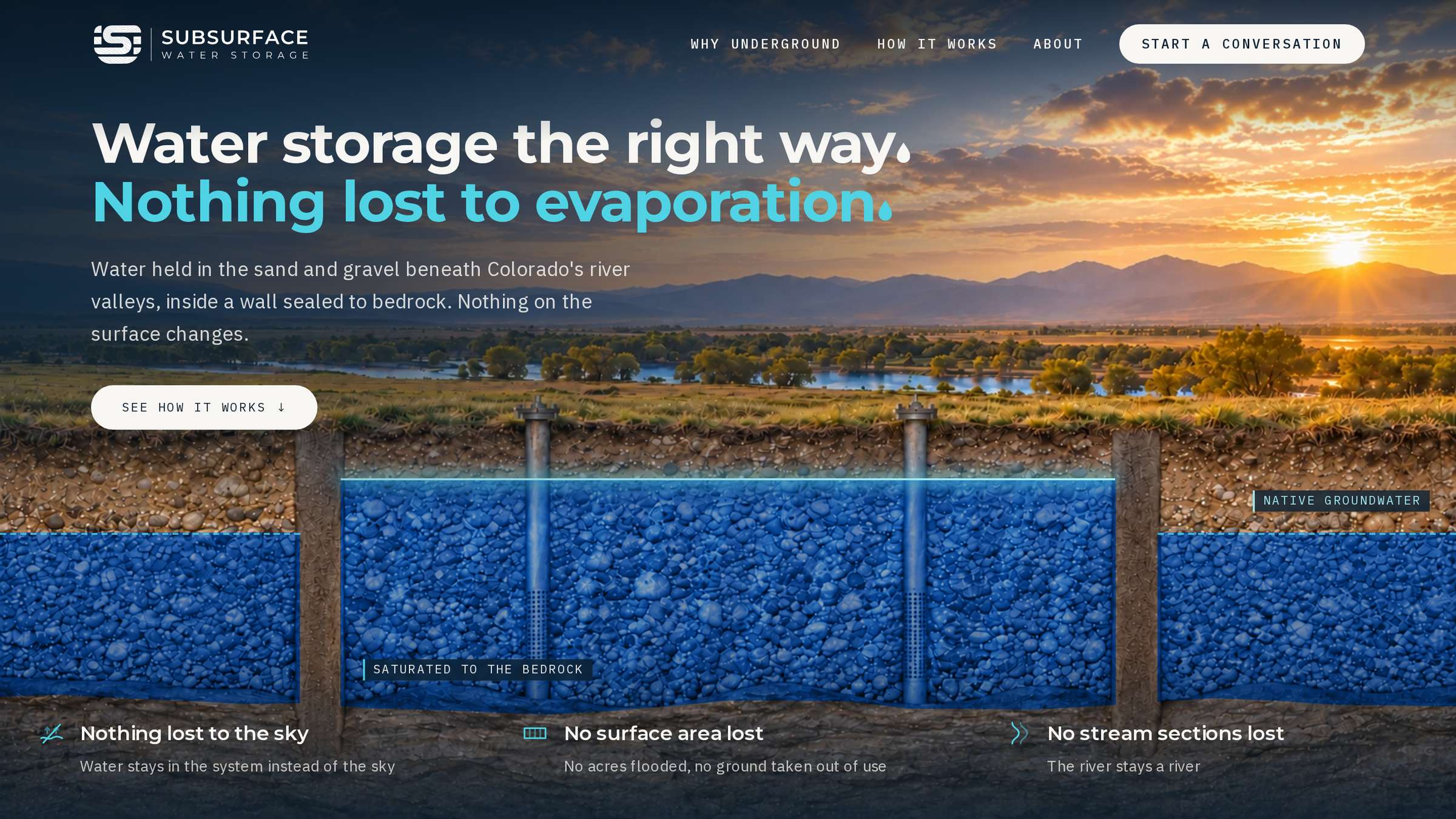
SUBSURFACE WATER STORAGESEPT 2026 · FIRST CLIENT
Where the pipeline was built. Two brand rounds, a site map and copy for water providers and agriculture, the full site, phone first.
MINE: The brand direction, every page before launch, the handover
Brand and site live in about three weeks. Every account, change and undo step written down for the client.
First full run of all eight build agents. Six build rounds, three review rounds, the final one by fresh agents.
MINE: The direction at Gate 1. Hero, cost line and door order at Gate 2
11 blocking issues to 0. Zero axe violations. Critic pass.
03
PRE-SALE REVIEW, A DENVER RESTAURANT GROUPOCT 13
Three research lanes and 95 sources checked, written up as a pre-sale review.
MINE: Held at Gate 2 until after the first conversation. Led that call with one finding, unbilled
Found a compromised site and domain renewals coming due.
04
HOLLY HILLS BIBLE CHURCH, FIRST MONTHLY CHECKOCT 13
Care checked every page on phones and desktops, the code underneath, and every visit that hit a missing page.
MINE: Approved five fixes one by one. Kept one finding as a branding exception
Security advisories 46 to 0. 103 old addresses redirected. Five fixes live in about a day.
Not a demo that ran once. Four different kinds of work through one system, each with the human decisions marked.
05Results
~3wks
For a water storage company’s new brand and site, start to live
46→0
Security advisories cleared on a church’s live site in its first monthly check
~1day
From that check to five approved fixes live
11→0
Blocking issues fixed before the studio’s own site shipped
0
Changes to a client’s live site without my sign-off
11
Agents doing the work, plus one in build
Figures come from the engagement run logs. This is a single-operator system. What it means for a design team is a hypothesis I’d want to test with that team, not a result I can claim.
06Key learning
“Design the decisions, then automate around them.”
The hard part was never getting an agent to produce work. It was deciding what each one owns, what it has to show a person, where the gates go, and who reviews the reviewer. Those are the same questions a design team faces when it brings agents into its own workflow, and they’re the work I’d do leading one. The pattern started on my own job search. Ellev8 is where it runs on real clients.